
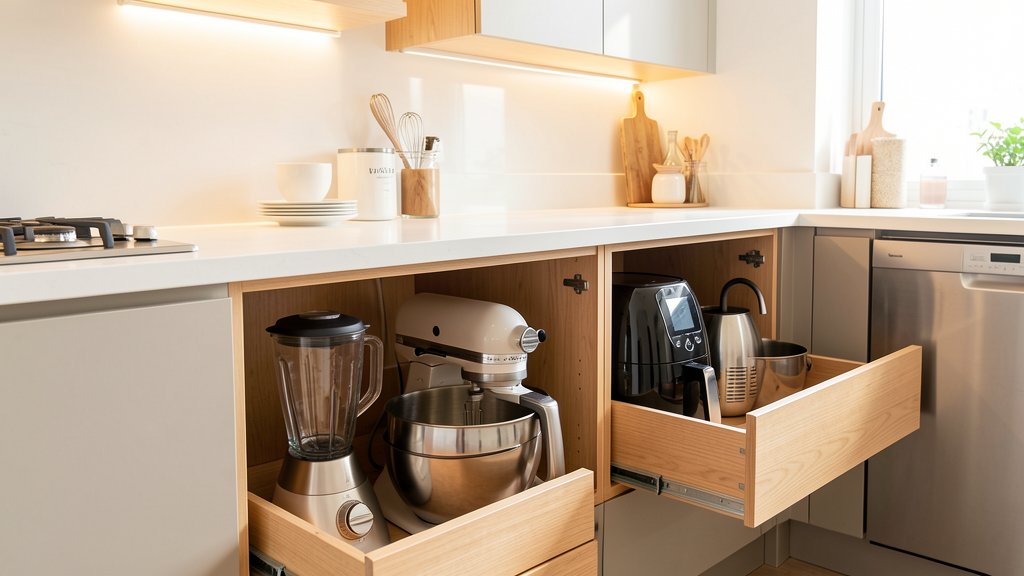


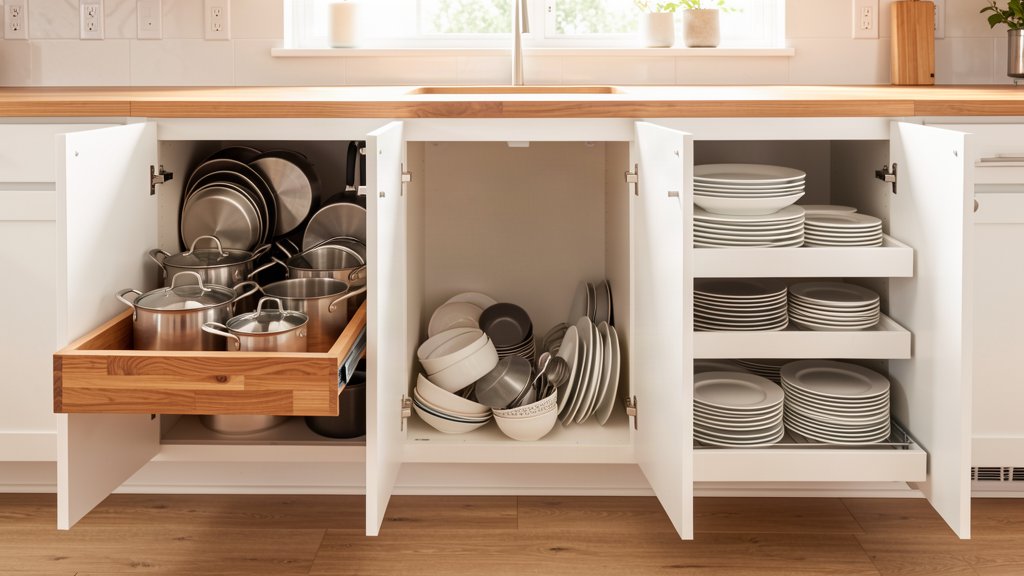
Every kitchen has one cabinet that quietly becomes the heaviest thing in the house. It holds the cast iron, the bulk pantry cans, the extra pots you swear you’ll use someday. And if that cabinet is a stock shelf, you know the drill: you’re kneeling, shifting a casserole dish out of the way, and praying nothing falls on your toes.
Pull-out shelves fix the reaching problem. But the question most buyers never ask is the one that actually matters: how much weight can the thing hold before it starts sagging, sticking, or failing? Here’s the honest answer, and where that number lives.
The spec that matters is the slides, not the shelf
Here’s the detail that surprises people: the shelf board itself is rarely the weak point. A well-made hardwood shelf will support far more than a household ever loads onto it. The limiting factor is the slide hardware the shelf rides on.
Two things define that hardware:
- Weight rating. Quality pull-out systems use 100 lb capacity slides. Cheap off-the-shelf trays often sit on 40–50 lb hardware — fine for a few spice jars, not for a stack of canned goods.
- Full extension. A full-extension slide brings the entire shelf out of the cabinet, so you can load and unload evenly instead of stacking the heaviest items near the front where the shelf is least supported.
- Ball bearings. Rolling ball bearings keep the shelf moving smoothly under load. Friction slides start grinding and binding the moment you add real weight.
If someone quotes you a pull-out without naming the slide rating, you’re not getting the answer yet.
How much should you actually load?
The rating is a ceiling, not a target. Here’s how to think about practical loads:
- Base cabinet pull-outs (100 lb slides): realistically 70–80 lbs spread across the shelf. Pots, pans, and a few bulk containers fit comfortably in one deep base drawer.
- Two-tier systems: spreading 100 lbs across two tiers halves the load on each, which is why tiered pull-outs outlast single-board shelves under heavy use.
- Upper cabinet pull-outs: treat 40–60 lbs as the working limit. Small appliances, mugs, and counter backup belong here — not your largest pots.
- The distribution rule: heavy items centered and low, not stacked on the far edge. An uneven load on the slide rails is how good hardware gets destroyed.
None of this is about living on the edge. A properly rated system should handle a decade of daily use with the full load and still slide shut without a second thought.
The three ways pull-out shelves fail under load
When a pull-out starts misbehaving, it’s almost always one of three problems — and all three trace back to hardware that was under-rated for the load:
- Mid-span sag. The shelf bows in the middle when fully loaded. Undersized slides are flexing, not the shelf.
- Sticking or binding at full extension. The shelf resists the last few inches — a classic sign of slides that weren’t rated for the weight they’re carrying.
- Gradual roughness. It gets harder to open over months. Ball bearings are wearing out under a load they weren’t rated for.
Worth reading if you’re already feeling these symptoms: our guide to diagnosing sticking, sagging, and grinding slides — it walks through which problems are fixable and which mean the hardware needs replacing.
Why the Valley pushes storage harder
Phoenix kitchens tend to carry more weight than the national average, for two reasons. First, bulk buying — a 28-can count of soup or a Costco haul lands in the pantry cabinet and stays there for weeks. Second, seasonal heat means more appliances and containers in constant rotation — stand mixers, espresso gear, holiday cookware all fighting for the same base cabinet.
A shelf system built for a light-load kitchen will still work in the Valley, but you’re running it near its ceiling every day. Hardware rated for the real load is the difference between smooth for ten years and a sagging shelf by year two.
How to check before you buy
You don’t need to be a hardware nerd — you just need to ask three questions:
- What’s the slide weight rating, per shelf?
- Are the slides full extension with ball bearings?
- How are they mounted — to the cabinet side walls, or just the front rail?
Answers to all three tell you whether the system will carry your actual kitchen. And if you want the numbers in context — what a full custom system costs, what you get at each price point — see our Phoenix pricing guide for custom pull-out shelves, and start with our priority list of which cabinets to upgrade first so the heavy-duty hardware goes where it earns its keep.
Get your cabinets measured — for free
Load ratings only mean something against your actual cabinets — the width, depth, and what you actually store. We do a free in-home consultation across the Phoenix metro: we measure your cabinets, walk through how you use them, and show you the hardware options with real numbers attached.
Call (602) 799-9626 or request a free consultation online. You’ll know exactly what your cabinets can hold — and exactly what it takes to make them hold it.