


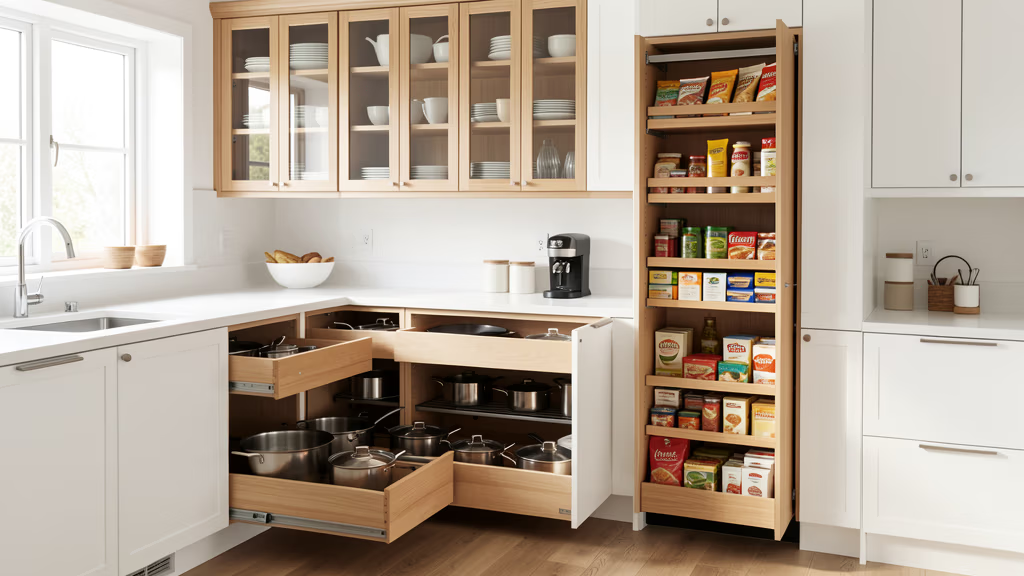
Walk into almost any kitchen — including our own — and the dishes live in two places: the dishwasher, and the upper cabinet above the counter. The upper cabinet is where the problem lives. A standard upper cabinet is 30 inches tall. Your plate stacks start about a foot up from the counter, and the good plates are at the very top, behind everything you use daily. Every time you want the serving platter or the holiday china, you’re reaching past a stack of mugs, sometimes with a step stool, sometimes not.
The fix that’s been quietly spreading through kitchen storage circles this year is the roll-out dish cabinet: a full-extension shelf that slides the entire contents of the upper cabinet out to you. It turns the top shelf from a forgotten attic into usable storage. Here’s what makes it work — and what to watch for if you’re considering one.
Why the Top of the Cabinet Is Dead Storage
Upper cabinets are where kitchens quietly lose their storage. The math is simple: a standard upper cabinet is 30 inches tall, but comfortably reachable space is only the bottom 12 inches or so. Everything above that is a trade between effort and elbow strain, and most people stop using it.
The result is the same pattern in nearly every house we visit. The bottom of the upper cabinet holds the everyday mugs and the stuff you actually reach for. The top holds the things you’ve given up on — the big serving dishes, the extra plates, the things that only come out twice a year. And because they’re high up and heavy to reach, people stop using them at all. The cabinet looks full, but it’s mostly wasted.
A roll-out dish shelf changes the physics. Instead of reaching up and over, the whole shelf slides out on ball-bearing hardware, and the plates are at counter height in front of you. No stool, no straining, no elbow-deep digging.
What a Roll-Out Dish Cabinet Actually Is
A roll-out dish cabinet is a custom hardwood shelf mounted on full-extension, ball-bearing slides inside your existing upper cabinet. The shelf is built to the exact width and depth of the cabinet — no gaps, no shims. It carries the weight of a full stack of plates, serving dishes, and glassware, and it glides out on the slides the same way a drawer does.
The important detail is the hardware. This is a shelf that has to carry real weight, out at full extension, hundreds of times a year. Cheap hardware wobbles, sags, and sticks after a while. We build our shelves with full-extension ball-bearing slides rated for 100 pounds, which is well past what a stack of dishes actually weighs. The shelf comes out smooth and stays there until you push it back in.
Where Roll-Out Dish Shelves Make the Most Sense
Not every upper cabinet needs one. The value shows up most in specific spots:
The cabinet above the stove
This is where the good serving dishes live, and it’s the least-used upper cabinet in most kitchens. A roll-out shelf here turns the serving platters and holiday dishes from forgotten into actually usable.
The cabinet where the “extra” plates live
That stack of plates behind the daily mugs — the ones you grab when company’s coming? A roll-out shelf brings that whole stack to counter height instead of forcing you to reach past the everyday mugs.
Narrow upper cabinets
The slim cabinets between larger ones, or the narrow cabinet next to the range hood, are usually too narrow for a lazy susan or a turner shelf. A roll-out shelf is the natural fit. It makes the narrow box fully usable without wasting the depth.
Roll-Out vs. Lazy Susan vs. Nothing: The Honest Comparison
There are a few ways to fix the top shelf problem. Here’s how they stack up:
A lazy susan (turner shelf) works for round, short items — jars, spice containers, a few glasses. It’s cheap and fine for that, but it can’t carry a stack of plates, and the items on the outer edge are still hard to reach when the cabinet is full.
A roll-out shelf carries real weight and brings the entire contents to you. It’s the right answer for dishes, serving pieces, and anything heavy or tall. The shelf is custom-built to your cabinet, so it fits like it came with the house.
Doing nothing is what most kitchens default to. The top shelf stays full of stuff you’ve stopped using, and the cabinet quietly becomes part of the house’s dead space.
What It Costs
A typical Shelf Theory project of ten custom pull-outs, built to fit and professionally installed, starts around $999. A single roll-out dish shelf is one of the more affordable pull-outs in the lineup — the cabinet’s already built, so the work is the shelf, the hardware, and the install. Most installs are finished in a single visit, with no mess left behind and no changes to your cabinet doors or boxes.
If you’ve got a row of upper cabinets that’s mostly dead space, this is usually the first upgrade we recommend. It’s the kind of change you feel on day one — the serving dishes become the first thing you grab instead of the last thing you remember.
Get a Free Quote
Shelf Theory serves Phoenix, Scottsdale, Chandler, Gilbert, Mesa, and the whole Valley. Call (602) 799-9626 or request your free in-home design consultation online. We’ll look at your cabinets, measure everything ourselves, and give you a clear written quote before any work starts. To see the full range of what we build, browse our pull-out shelf solutions and kitchen pull-out shelves.