
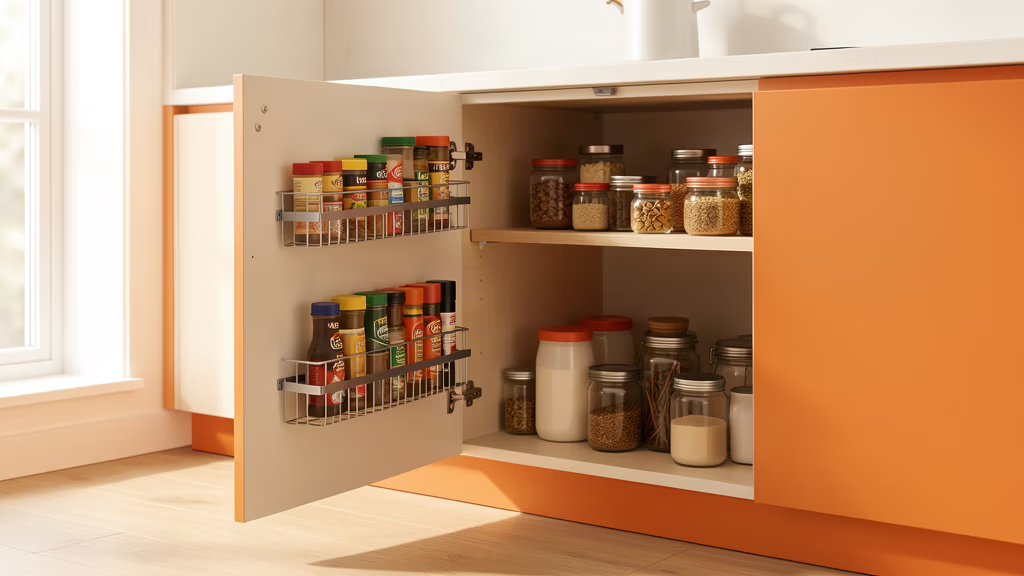




A custom pull-out shelf should outlast the cabinet it lives in. Ours are guaranteed for life, and the hardware is chosen to last decades of weekly use. But even the best pull-out shelves need about two minutes of attention every few months — and knowing the three signs that mean “stop, something is wrong” can save you from a bent rail or a shelf that no longer glides.
Here is the complete care guide, written for Phoenix homeowners. It is the same checklist our installers walk you through on install day.
The two-minute monthly check
Do this while you are already in the kitchen or laundry — open the shelf, do three things, close it.
1. Wipe the slides
Ball-bearing slides are not sealed forever. Dust, flour, cooking grease, and — very real in the Valley — fine desert dust settle into the rail over time. A quick pass with a dry or barely-damp cloth keeps the bearings rolling. This is the single biggest longevity habit for any sliding hardware in a house.
2. Test the travel
Push the shelf all the way in, then pull it fully out — no force. It should glide to full extension with even resistance and close smoothly. Full-extension ball-bearing slides should let the shelf come out completely. If it stops short of fully open, do not keep pushing it; see the warning signs below.
3. Check the front edge
Look at the mounting screws on the shelf’s front apron. They should be snug. A shelf that is starting to twist on its slides almost always shows one side lifting a fraction first. A quarter turn on a socket takes ten seconds and prevents the problem from becoming a problem.
What NOT to do
- Do not lubricate the bearings with oil or household spray lube. Grease and dust combine into a paste that grinds the bearings. If the slides ever feel gritty, that is a sign to have us service them, not to add oil.
- Do not overload the shelf. Our slides are rated for 100 lb, but that rating is for a single shelf at even load. A 60 lb bottle of detergent plus a stack of towels on one corner is a different load than 60 lb spread out. Big items go on the bottom shelf, not stacked on top of a pull-out.
- Do not force a shelf that is sticking. A sticking slide is telling you something is misaligned or loaded. Forcing it bends the rail — and bent slides are the one failure that is not a quick fix.
- Do not let kids use the shelf as a step. We mean it gently, but the shelf is rated for stored weight, not a kid climbing on an extended drawer.
Three warning signs that mean call us
Sign 1: A grinding or crunchy sound
A healthy slide is quiet — you hear the shelf move, not the hardware. Grinding means grit has worked into the bearing race, or a bearing is beginning to fail. Small grit problems are a ten-minute service visit. Ignored, they become bent rails and a shelf that never closes flush.
Sign 2: The shelf does not close flush anymore
When the shelf sits a quarter inch proud of the cabinet face, the slides have shifted or a mounting screw has backed out. It is a minor alignment issue when caught early — and the kind of thing that is easy to fix from the inside in about fifteen minutes.
Sign 3: Sagging or twisting under load
If the shelf feels “soft” or one corner dips when you load it up, the slide on that side is working harder than the other. That is either an overloaded shelf or a slide that is at the end of its life. Either way, it is a phone-call situation, not a “it’s fine” situation — and under our lifetime guarantee, the hardware service is on us.
Phoenix-specific: dust, heat, and your slides
Two local factors affect sliding hardware here more than in a wetter climate. First, the fine dust we mentioned — monsoon season in particular tracks it in on every shoe and sleeve, and it settles into anything with a gap, which slides are. The monthly wipe covers it. Second, the dry heat is actually good for the wood: our shelves are hardwood and finished to handle Valley humidity swings, and a dry cabinet is where they perform best. Just keep the wood out of sustained direct sun through a window, which fades the finish faster than any other “care” issue we see.
If you are deciding what hardware level you need before you buy, our breakdown of what makes a quality pull-out shelf covers the differences between cheap soft-close hardware and the ball-bearing slides we build on.
When to bring in a pro
Be honest with yourself on one thing: slide rails, once bent or gritty past the point of a wipe, are not a DIY repair. The fix requires the right tools to re-align the rail to the cabinet box, and doing it wrong turns a small job into a shelf that never works right. Our installers can service, realign, or replace the hardware on any shelf we have built — and because it is covered under the lifetime guarantee, a service call on our hardware is free.
Keep the lifetime promise alive
Two minutes a month: wipe, test, tighten. Catch the three warning signs early. Your pull-out shelves will keep running like day one for as long as the cabinets do.
Questions about your shelves, or thinking about adding some to the cabinets you still crawl into? The measurement is free and the visit takes about twenty minutes. Request your free in-home consultation, or see what a finished project looks like on our pull-out shelves page.