


The Kitchen Layout Trend Designers Are Calling the Future of Cooking
If you’ve walked into a newly renovated kitchen lately, you may have noticed something interesting: the old “kitchen triangle” rule — sink, stove, fridge forming a perfect triangle — is being replaced by something far more practical. Interior designers and the National Kitchen and Bath Association are both calling it kitchen zoning, and it’s the biggest layout trend of 2026.
So what exactly is kitchen zoning, and why are homeowners from Phoenix to Las Vegas embracing it? More importantly, how can you bring it into your own kitchen without a full-scale remodel?
What Is Kitchen Zoning?
Kitchen zoning is the practice of organizing your kitchen into dedicated areas, each designed for a specific task or activity. Instead of thinking about your kitchen as one big room, you break it down into functional zones — like a prep zone, a cooking zone, a cleanup zone, a baking zone, and even a coffee or breakfast zone.
Think about it this way: when you’re preparing dinner, where do you chop vegetables? On the counter near the sink, probably. Where do your knives live? In a drawer or block nearby. Where do you store cutting boards? In a cabinet close by. That cluster of related items and activities is a zone. Kitchen zoning simply makes that intentional.
The Five Core Zones Most Kitchens Need
While every kitchen is different, most homes benefit from these five zones:
- Prep Zone: Clear counter space, sharp knives, cutting boards, mixing bowls, and ingredients stored within arm’s reach.
- Cooking Zone: Pots, pans, cooking utensils, oils, and spices stored near the stove or oven.
- Cleanup Zone: Dish soap, sponges, towels, recycling, and trash bins near the sink and dishwasher.
- Storage Zone: Food, drink, and bakeware organized by category — dry goods in one area, canned goods in another, beverages in a third.
- Social or Breakfast Zone: Mugs, coffee supplies, breakfast cereals, and kid-friendly snacks grouped together, often away from the main cooking action.
Why the Kitchen Triangle Is Falling Out of Favor
For decades, the kitchen triangle was the gold standard of kitchen design. It made sense for smaller families and simpler cooking routines. But modern kitchens serve more purposes than just meal preparation. They’re homework stations, casual dining areas, cocktail bars, and command centers.
Kitchen zoning solves this problem by creating dedicated spaces for each activity. A family of four can have one person prepping vegetables in the prep zone, another grabbing a snack from the breakfast zone, and a third washing dishes at the cleanup zone — all without bumping into each other.
This is especially relevant for Phoenix-area homes, where open-concept floor plans blend the kitchen with living and dining spaces. Zoning keeps the chaos contained where it belongs, while maintaining the airy, connected feel that Southwestern homes are known for.
How Pull-Out Shelves Make Kitchen Zoning Actually Work
Here’s where things get really interesting for homeowners in Phoenix, the West Valley, and beyond. You can draw all the zone lines you want on paper, but if your cabinets are deep, dark, and impossible to organize, those zones are just wishful thinking.
Custom pull-out shelves are the secret weapon of kitchen zoning. Here’s why:
Zone Visibility
With fixed shelves, items at the back of a deep cabinet disappear. You buy another bottle of olive oil because you forgot you already had three. Pull-out shelves bring everything to the front — every spice jar, every can of tomatoes, every baking supply — so you always know what you have and where it belongs in your zone system.
Zone Accessibility
A baking zone that requires kneeling and digging through a dark lower cabinet isn’t a zone — it’s a chore. Tiered pull-out shelves in pantry organization systems let you see every ingredient at a glance. Heavy cast iron skillets live on sturdy lower pull-outs. Delicate glassware sits on upper glide-out racks. Everything is at the right height and easy to reach.
Zone Flexibility
Maybe your prep zone needs more counter space. Maybe your cleanup zone would benefit from a dedicated recycling pull-out. Custom pull-out shelves are adjustable, so your zones can evolve as your cooking habits change. No renovation contractor needed.
The Kitchen Zoning Advantage for Arizona Homes
Arizona homes tend to run bigger than the national average, and many Phoenix-area kitchens in the West Valley, Scottsdale, and Tempe feature generous cabinetry that can easily become disorganized without the right systems. Zoning gives you a framework. Pull-out shelves give you the execution.
Consider the typical Phoenix family kitchen: lots of cooking happening during cooler months, holiday gatherings that stress-test your storage, and a culture of entertaining that means your kitchen sees more use than you might expect. When everything has a designated zone and a pull-out home, meal prep goes from stressful to smooth.
The same principles apply to Las Vegas kitchens, where hot desert summers mean the kitchen often doubles as the main gathering space when the family wants to stay out of the heat. Well-zoned kitchens keep the host in the action without getting in the way.
Getting Started With Kitchen Zoning
You don’t need to tear out your cabinets to start zoning. Here’s a simple approach:
- Observe your kitchen for a week. Where do you naturally gravitate when cooking? Where do related items cluster? That’s your first zone.
- Identify the friction points. What cabinet makes you sigh every time you open it? That’s your priority zone for improvement.
- Group items by activity. Move everything related to one task into the same area. If spices belong near the stove, they belong near the stove — not scattered across three cabinets.
- Install pull-out shelves in the problem areas. Deep cabinets, awkward corners, and unused under-sink space are prime candidates for conversion to glide-out storage.
- Refine as you go. Zones aren’t set in stone. Adjust them based on how you actually live and cook.
Kitchen Zoning Meets 2026 Design Trends
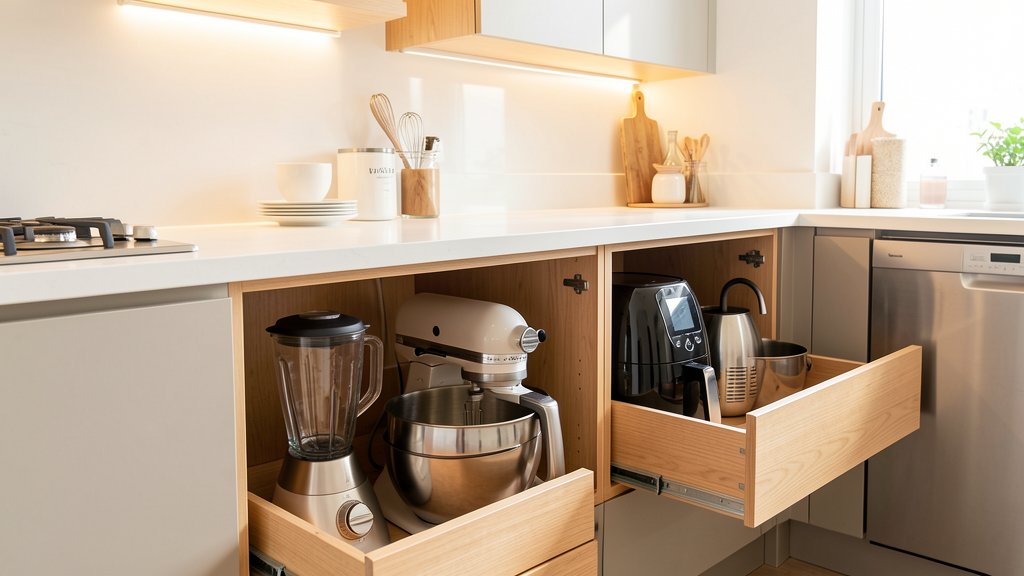
Kitchen zoning doesn’t clash with this year’s other big trends — it enhances them. The warm wood tones designers love in 2026 look fantastic on pull-out shelf tracks. The push toward clear countertops pairs perfectly with appliance garages and dedicated storage zones. Even the trend toward “dirty kitchens” or butler’s pantries relies on zoning principles: a secondary zone for baking, entertaining prep, and heavy-duty cleanup.
Whether you’re renovating a mid-century home in central Phoenix or updating a newer build in the West Valley, kitchen zoning is the organizational strategy that makes every other design choice work better.
Ready to Zone Your Kitchen?
Kitchen zoning isn’t just a design trend — it’s a smarter way to live in your kitchen. And custom pull-out shelves are the tool that makes it all possible. From pantry organization to under-sink solutions, every zone in your kitchen deserves a system that works as hard as you do.
Contact Shelf Theory today for a free consultation and discover how custom pull-out shelves can transform your Phoenix-area kitchen into a perfectly zoned, effortlessly functional space.