


Your Complete Guide to Pantry Organization for Arizona Kitchens
Walking into a disorganized pantry is one of the most frustrating experiences for any homeowner. You open the door, and instead of finding what you need, you’re greeted by a chaotic maze of half-empty boxes, expired spices, and mystery cans that have been hiding in the back since last winter. If this sounds familiar, you’re not alone — and more importantly, there’s a solution.
At Shelf Theory, we’ve helped hundreds of Phoenix-area homeowners transform their pantries from storage chaos into organized, functional spaces. Here’s our step-by-step guide to pantry organization that actually works in the real world — not just in magazine photos.
Step 1: Empty Everything and Assess
This is the hardest step, but also the most important. Pull everything out of your pantry. Yes, everything. Every box, every jar, every bag of chips that’s been crushed at the bottom of a stack.
Once everything is out, take stock. What do you have too much of? What’s expired? What items do you never actually use? This audit is crucial for Phoenix homeowners because our local shopping habits — bulk trips to Costco, frequent trips to Sonoran Market, seasonal stocking for holidays — mean pantries tend to accumulate stuff faster than anywhere else.
Pro tip: While everything is out is the perfect time to clean your pantry shelves. A quick wipe-down with warm soapy water removes sticky spills, flour dust, and the inevitable crumbs that accumulate in Arizona’s dry climate.
Step 2: Zone Your Pantry by Category
Once you’ve cleared out the dead weight, group your remaining items into logical zones. Here’s what works for most Phoenix-area kitchens:
- Cooking essentials zone: Oils, vinegars, spices, and baking supplies grouped together near where you actually cook
- Grains and pasta zone: Rice, pasta, cereal, and flour — items that benefit from airtight containers
- Snack zone: Chips, crackers, granola bars — accessible for kids and quick grabs
- Canned goods zone: Canned vegetables, soups, beans — rotate front-to-back so older items get used first
- Beverage zone: Coffee, tea, drink mixes — easy to grab and go
This zoning system works regardless of pantry size. Whether you have a walk-in pantry in a newer West Valley home or a small closet pantry in a mid-century Phoenix bungalow, the principle is the same: every item has a designated home.
Step 3: Invest in the Right Storage Solutions
This is where most DIY pantry guides fall short. They tell you to buy bins and labels — which is fine — but they skip the most important part: the hardware that makes pantry organization effortless day after day.
Fixed shelves are the enemy of pantry organization. Why? Because items in the back become invisible. You open the pantry, grab what’s in front, close the door, and six months later you discover three cans of diced tomatoes expired behind a box of crackers. This is the exact same problem that plagues deep base cabinets — and the solution is the same.
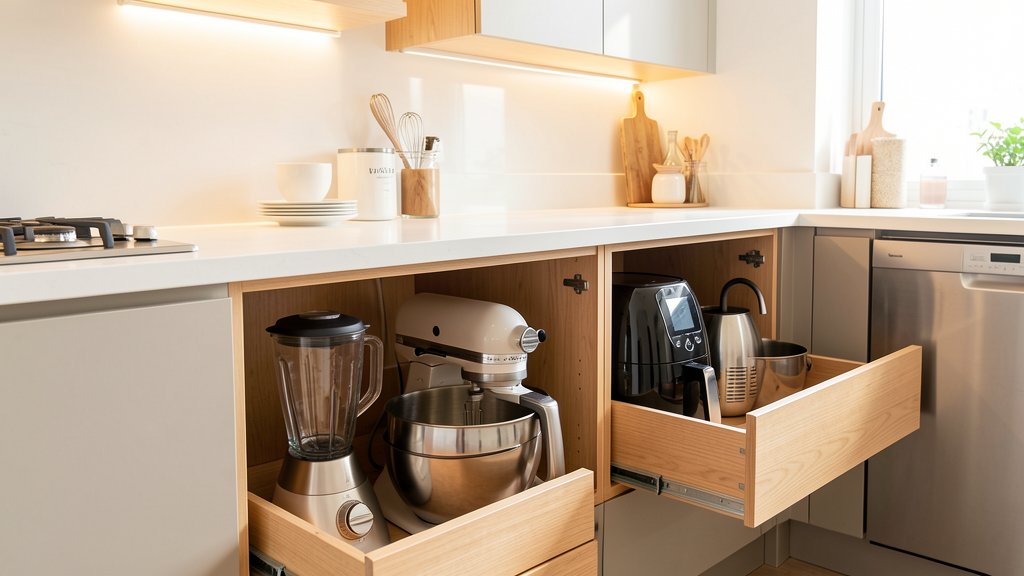
Pull-out pantry shelves transform your pantry from a storage cave into a display case. Every shelf glides out on smooth ball-bearing tracks, bringing everything within reach. No more reaching into dark corners. No more digging behind stacks of boxes. Every can, every jar, every box is visible the moment you open the pantry door.
Here’s why pull-out shelves are a game-changer for pantry organization specifically:
- Double your effective storage: With pull-out shelves, you can install two or three shelves in the space of one fixed shelf, stacking vertically without sacrificing accessibility
- Heavy items become manageable: A fully loaded pantry shelf on ball-bearing glides just as smoothly as an empty one. No more straining to pull a shelf of canned goods
- Visibility eliminates waste: When you can see everything at a glance, you stop buying duplicates and start using what you have
- Kids can participate: Pull-out shelves bring snack zones to a height children can reach independently, reducing the “Mom, I’m hungry” interruptions during dinner prep
Step 4: Containerize Dry Goods
Once your shelves are organized and pulling out smoothly, transfer dry goods from flimsy bags and boxes into clear, airtight containers. This serves three purposes:
- Pest prevention: Arizona’s warmth means pantry moths and weevils are a real threat. Airtight containers seal them out completely
- Freshness: Flour, rice, and pasta stay fresh significantly longer in sealed containers
- Visual clarity: Clear containers let you see exactly how much you have at a glance, which pairs perfectly with pull-out shelves that bring everything to the front
Label everything with the contents and the date you opened it. This tiny habit prevents the “mystery powder” problem and helps you use older items first.
Step 5: Implement a Rotation System
The FIFO method (First In, First Out) is the gold standard for pantry organization. When you buy new groceries, move the older items to the front and place new ones behind them. This simple system ensures nothing gets forgotten and expired.
Pull-out shelves make FIFO effortless because every item slides to the front automatically. With fixed shelves, FIFO requires reaching behind everything — which nobody does. With pull-out shelves, it happens naturally every time you open the pantry.
The Phoenix Advantage: Why Local Homeowners Benefit Most
Phoenix homeowners face unique pantry challenges that homeowners in other climates don’t. Our extreme heat means temperature-sensitive items need careful storage. Our desert-dry air means some foods dry out faster while others (like bread) go stale quicker. And our culture of large-family gatherings and holiday entertaining means our pantries need to handle bigger loads than average.
Whether you’re hosting a Cinco de Mayo celebration, stocking up for Ramadan, or preparing for the holiday season, a well-organized pantry with pull-out shelves means you can handle peak demand without the usual stress of digging through clutter.
Pantry Organization Mistakes to Avoid
Based on what we see in thousands of Phoenix kitchens, here are the most common pantry mistakes:
- Buying decorative bins before organizing: Containers should serve your items, not the other way around. Organize first, then containerize
- Ignoring vertical space: The space between your top shelf and the ceiling is wasted real estate. Pull-out systems maximize every inch
- One-size-fits-all shelving: Tall baking sheets need tall spaces. Bulk items need reinforced shelves. Custom pull-out systems adapt to your actual inventory
- Skipping the cleanup phase: Never put items back into a dirty pantry. Clean first, organize second, fill third
When to Call a Professional
Some pantry organization projects are great DIY weekends. Others benefit from professional eyes and hands. Here’s when to call in the experts:
- Your pantry has awkward angles or non-standard dimensions
- You want to maximize storage in a small or oddly shaped space
- You’re dealing with heavy items (bulk food, large appliances) that need reinforced support
- You want a system that will last 15+ years, not just look tidy for a few months
At Shelf Theory, we specialize in custom pantry organization systems throughout the Phoenix metropolitan area — from the West Valley to Scottsdale, Tempe to Las Vegas. We measure your space, understand your storage needs, and design a system that makes daily kitchen life easier.
Ready to Transform Your Pantry?
A disorganized pantry is more than an eyesore — it’s a daily source of stress, food waste, and wasted time. The good news is that the solution is simpler than you think. With the right organization system and the right hardware, your pantry can become one of the most functional spaces in your kitchen.
Whether you need help with kitchen organization, pantry organization, or a complete cabinet upgrade, Shelf Theory has the expertise and the experience to deliver results that last.
Contact Shelf Theory today for a free consultation — and let’s turn your pantry from a source of stress into a source of pride.