


Walk into most kitchens in the Valley and you will find the same scene: a microwave on one end of the counter, a coffee maker in the middle, a toaster hiding behind a fruit bowl, and somewhere in the mix, a cutting board you actually need. The counter is the most valuable square footage in the kitchen, and for most of us it has quietly become appliance storage.
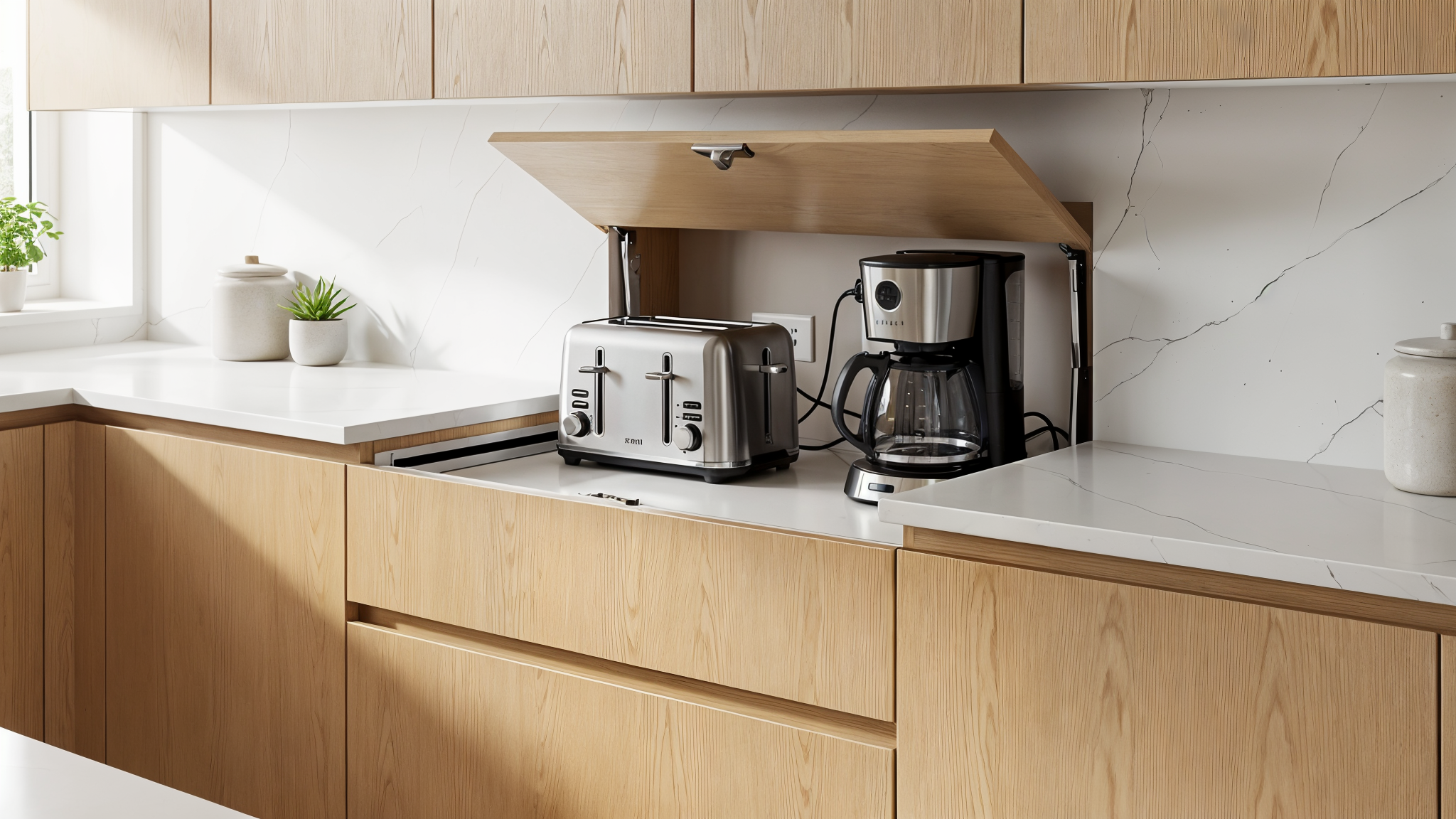
In 2026, there is a name for the fix: the appliance garage — a dedicated cabinet zone built to hide appliances when they are not in use. It is showing up in trend reports, remodel showrooms, and the kitchens of people who are done fighting their countertops. Here is what it actually is, and how custom pull-out shelves make it work better.
What Is an Appliance Garage, Really?
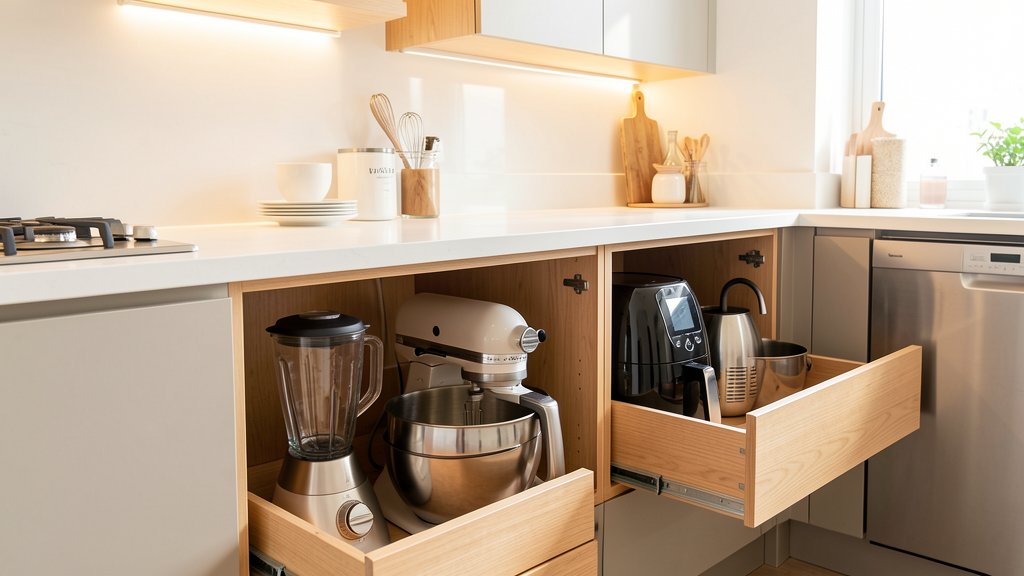
It is a designated zone where small appliances live when they are not in use — a dedicated base cabinet, a wall unit, or a section of your existing cabinets reorganized around one job: keeping appliances off the counter.
The concept is not new, but 2026 made it mainstream. Industry data on upgraded kitchens shows the most-requested storage additions are pull-outs for waste and recycling (64%), dedicated spots for cookie sheets and trays (55%), spices (41%), cutlery (38%), and the microwave (38%). That last number says it all: nearly four in ten people are actively hunting for a place to put their microwave that is not the counter.
Why Counters Keep Turning Into Appliance Landing Zones
Here is the problem in one sentence: small appliances have nowhere to live.
Appliance garages are not a vanity upgrade — they solve a daily friction in your kitchen organization. A microwave on the counter eats 30 inches of workspace every day; a coffee maker needs 24. Add a toaster, a can opener, and a stand mixer that sees one use a month, and the counter is full before you have cracked an egg. So you work around it — prepping on the island if you have one, or on the floor if you do not.
Worse, the counter is the dirtiest surface in the kitchen — appliances sitting out collect cooking spray, dust, and crumbs, and in the Arizona climate that dust is a constant, not a weekend problem.
How an Appliance Garage Actually Works
A well-planned appliance garage is a system, not just a cabinet with things inside. Here are the pieces that matter.
Pick the Right Cabinet
The ideal appliance garage sits next to the range or at the end of a counter run, with a door that opens fully and enough clearance to load a dish onto the shelf inside. A 24-inch base cabinet works for a microwave and two small appliances; 36 inches adds room for a second shelf. If you are planning new cabinets, this is the one cabinet worth spending extra on.
Put Pull-Out Shelves Inside, Not Just Shelves
This is where most appliance garages fall short. A static shelf in a deep cabinet means reaching past a 40-pound stand mixer to grab the breadmaker behind it — so the breadmaker stops going back, and the cabinet becomes a junk drawer for appliances. Custom pull-out shelves on 100+ pound ball-bearing slides change the equation: the whole shelf rolls out at waist height, everything is visible, and putting things back takes two seconds. That two-second advantage is what keeps a garage clean a year later, not just on install day.
Plan Drop Zones for the Small Stuff
Cookie sheets, trays, and baking pans are the second-biggest counter invaders — which is why dedicated tray pull-outs landed at 55% in the 2026 data. A vertical tray pull-out in the appliance garage (or the cabinet beside it) handles the overflow a single appliance cabinet cannot.
Add a Waste and Recycling Pull-Out
The most-requested upgrade in all of 2026 is the recycling pull-out, and it belongs in the appliance garage zone. A narrow vertical unit with two or three bins on slides tucks beside the sink cabinet, keeps recycling out of sight, and frees the cabinet that used to be the junk bin.
The Benefits Nobody Talks About
Your Counter Becomes a Workspace Again
You get every inch of countertop back, but the real win is workflow: chopping, mixing, and plating happen where they should instead of on the floor, the island, or the dining table.
Appliances Last Longer
Stored inside a closed cabinet on smooth-rolling shelves, small appliances stay cleaner between uses — no dust on the toaster, no crumbs in the coffee maker. In a dry, dusty climate like Phoenix or Las Vegas, closed storage genuinely extends appliance life.
A Camera-Ready Kitchen
One of the most-quoted 2026 design trends is the camera-ready kitchen — homes that photograph well at any hour. An appliance garage delivers that on demand: close two doors and the counter reads as empty, even on the day everything got used.
It Gets Easier as You Age
Waist-height pull-out storage is an aging-in-place win: no bending for the cabinet floor, no step-stool for the top shelf. If you are planning the garage for a parent’s kitchen — or your own kitchen ten years from now — this is the part that matters most.
The Arizona Twist on Appliance Storage
Two things make appliance garages especially worth it in the Southwest. First, dust: desert air finds every open appliance, and closed storage with smooth-rolling shelves keeps things cleaner with less effort. Second, heat: a microwave on a July counter works against the room’s air; tucking it into a ventilated base cabinet at waist height is easier on both.
And because you are reorganizing cabinets anyway, do it with someone who builds locally. Shelf Theory manufactures its pull-out shelves right here in Phoenix — solid hardwood, 100+ pound ball-bearing slides, lifetime warranty — and installs across Phoenix, the West Valley, Scottsdale, and the greater Las Vegas area. When shelves are built for your cabinet’s exact depth and your appliances’ actual weight, your kitchen organization works for decades instead of settling into a drawer of stuff.
How to Plan Your Own Appliance Garage
Here is the order of operations:
- Inventory the appliances. List every small appliance and how often you use it. Daily drivers go on the top pull-out shelf; monthly items go to the back or a second shelf.
- Pick the location. Next to the range or at the end of a counter run, with full door clearance.
- Build it out with pull-out shelves, not static shelving. That is the difference between a garage that stays clean and one that becomes storage.
- Add the extras while you are in there — tray storage, a recycling pull-out, a spice pull-out. One install, one system, done. It also upgrades your pantry organization if the garage cabinet was doing double duty as the overflow bin.
Get a Free Consultation
The appliance garage is one of the few 2026 kitchen trends that does not require a remodel — it works with the cabinets you already own. If your counter is running out of room and your small appliances are living on it, the fix is a dedicated cabinet and shelves that make putting things back easy.
Contact Shelf Theory today for a free consultation, and we will measure your cabinets and show you exactly where your appliance garage fits — no obligation, no sales pitch, just a plan built for your kitchen.