
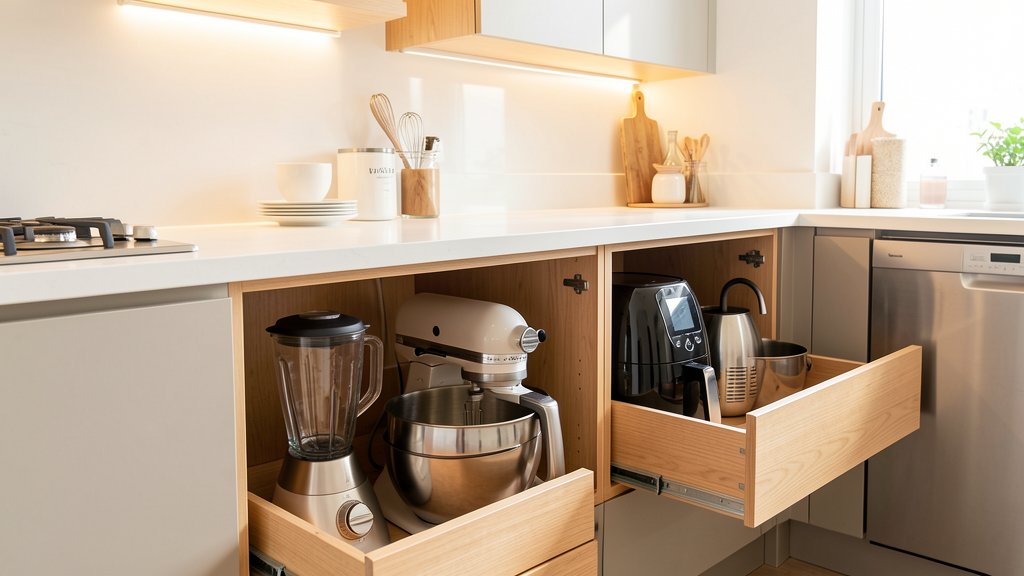


A cluttered kitchen can make even simple tasks feel harder than they should. You open a cabinet and everything is stacked on top of everything else. Pots are buried behind pans. Food containers never seem to have matching lids. Pantry items disappear in the back. Cleaning supplies pile up under the sink until you forget what is actually in there.
The frustrating part is that many kitchens are not truly “too small.” They are just not set up in a way that makes the storage easy to use.
If your kitchen feels cluttered and unorganized, you may not need a full remodel. In many cases, you can make a big improvement by rethinking how your current cabinets, drawers, and storage areas function.
Here is how to start.
1. Identify the Cabinets Causing the Most Frustration
Before buying bins, organizers, or new storage products, start by figuring out which areas are actually causing the problem.
Most cluttered kitchens have a few repeat trouble spots:
- Deep lower cabinets
- Pantry cabinets
- Pots and pans storage
- Food container storage
- Under-sink cabinets
- Corner cabinets
- Small appliance storage
- Junk drawers
These areas often become cluttered because they are difficult to access. When it is hard to reach the back of a cabinet, items get pushed around, forgotten, or stacked in a way that makes no sense.
A good first step is to open each cabinet and ask yourself: “Can I easily see and reach everything in here?”
If the answer is no, the cabinet is probably part of the problem.
2. Stop Using Deep Cabinets Like Regular Shelves
Deep cabinets are one of the biggest reasons kitchens become unorganized. They look useful because they offer a lot of space, but the back half of the cabinet often becomes wasted or hard to reach.
This is especially common in lower cabinets. You may store pots, pans, bowls, baking dishes, or small appliances inside, but anything in the back becomes annoying to access. Over time, you start using only the front part of the cabinet, while the rest turns into hidden storage.
That is why fixed shelves do not always work well for deep cabinets. They force you to reach into the space instead of bringing the stored items out to you.
Pull-out shelves can solve this by turning deep cabinets into sliding storage. Instead of bending, digging, or removing items from the front, you can pull the shelf forward and see everything inside.
3. Group Items by How You Actually Use Them
A kitchen becomes easier to organize when items are grouped by use, not just by category.
For example, instead of putting all cooking tools in one random drawer or all pantry items in one crowded cabinet, think about how you move through the kitchen.
You might create zones such as:
- Coffee and morning routine
- Baking supplies
- Everyday cooking
- Meal prep containers
- Kids’ snacks
- Cleaning supplies
- Pots and pans
- Small appliances
This makes storage more intuitive. If you bake often, your flour, sugar, measuring cups, mixing bowls, and baking sheets should be easy to access together. If you make coffee every morning, mugs, filters, coffee pods, and sweeteners should be stored near the coffee maker.
The goal is not just to make the kitchen look cleaner. The goal is to make it easier to use.
4. Remove What Does Not Belong in the Kitchen
Kitchen clutter often builds up because the kitchen becomes a storage area for things that do not really belong there.
You may find:
- Random paperwork
- Tools
- Old receipts
- Extra cords
- Broken containers
- Expired food
- Duplicate utensils
- Appliances you never use
- Plastic bags and packaging
Before organizing, remove anything that does not serve a real purpose in the kitchen.
This step matters because organizing clutter is not the same as solving clutter. If you keep everything, you are only moving the mess into a slightly better-looking arrangement.
Start with one cabinet at a time. Take everything out, wipe the space down, and only put back what you actually use or need.
5. Make the Most-Used Items the Easiest to Reach
Not everything deserves prime storage space.
The items you use every day should be the easiest to access. The items you use once or twice a year can go higher, farther back, or in a less convenient spot.
A simple rule:
Daily-use items should be reachable without digging.
That might include:
- Everyday plates and bowls
- Coffee items
- Cooking oils and spices
- Favorite pans
- Food storage containers
- Cleaning spray
- Trash bags
- Frequently used small appliances
When daily items are hard to reach, clutter returns quickly. You start leaving things on the counter because putting them away is inconvenient.
Better access leads to better habits.
6. Fix the Under-Sink Cabinet
The under-sink cabinet is one of the most common clutter zones in the kitchen. It is awkward because of the plumbing, dark inside, and often filled with cleaning products, sponges, dishwasher pods, trash bags, and miscellaneous household supplies.
To organize this area, start by removing duplicates and products you no longer use. Then group similar items together.
A pull-out shelf or sliding organizer can be especially helpful here because it allows you to access items without reaching around pipes or knocking things over.
This is a small upgrade, but it can make a big difference in everyday kitchen maintenance.
7. Get Small Appliances Off the Counter
Countertop clutter makes a kitchen feel messy even when the cabinets are organized.
Small appliances are often the biggest culprits:
- Air fryers
- Blenders
- Toasters
- Mixers
- Rice cookers
- Slow cookers
- Food processors
If you use an appliance every day, it may deserve counter space. But if you only use it occasionally, it should have a proper storage spot.
The problem is that many small appliances are heavy or awkward to store in deep cabinets. Pull-out shelves can make this easier by allowing you to slide the appliance forward before lifting it out.
This helps free up counter space without making the appliance harder to use.
8. Use Vertical Space Wisely
Many cabinets waste vertical space. You may have tall shelves with items stacked awkwardly, leaving empty air above them.
You can improve this by using:
- Shelf risers
- Stackable containers
- Dividers
- Tiered spice racks
- Lid organizers
- Pull-out shelves
- Cabinet door storage
The key is to avoid unstable stacking. If you have to remove five things just to reach one item, the setup will not stay organized for long.
Good organization should make access easier, not just fit more items into the cabinet.
9. Upgrade the Storage You Already Have
You do not always need new cabinets to create a more organized kitchen. Sometimes, the smarter option is to upgrade the way your current cabinets work.
Pull-out shelves are one of the most practical upgrades because they help you use the full depth of your cabinets. They can make lower cabinets, pantries, under-sink areas, and small appliance storage much easier to manage.
This is especially useful if your cabinet boxes are still in good condition. Instead of spending on a full remodel, you can improve function where it matters most.
For many homeowners, this is the difference between a kitchen that looks fine but feels frustrating, and a kitchen that works better every day.
10. Start Small, Then Build From There
You do not need to organize the entire kitchen in one day.
Start with the area that bothers you most. That might be the pantry, the pots and pans cabinet, the under-sink area, or the cabinet where food containers go to disappear.
Once you fix one problem area, the rest of the kitchen becomes easier to manage.
A cluttered kitchen is not always a sign that you need more space. Sometimes, you just need better access, better grouping, and smarter storage.
Make Your Kitchen Easier to Use With Shelf Theory
If your kitchen feels cluttered because your cabinets are hard to reach, Shelf Theory can help.
Shelf Theory creates custom pull-out shelves that fit inside your existing cabinets, giving you easier access to the items you already store there. It is a practical way to reduce clutter, improve organization, and make better use of the space you already have.
Visit Shelf Theory to explore custom pull-out shelving options for your kitchen.