

Pull-Out Shelves vs Drawers: The Truth About Kitchen Cabinet Storage
Walk into any kitchen showroom and you’ll hear the sales pitch: “Drawers are the future of kitchen storage.” But is that actually true — or is it just marketing? When it comes to transforming your existing kitchen cabinets, pull-out shelves and drawer fronts look identical from the outside, but the systems inside are dramatically different.
Understanding the difference could save you thousands and determine whether your kitchen organization project succeeds or ends up gathering dust in a garage.
[PHOTO PLACEHOLDER: Before photo of a standard kitchen with traditional swing-door base cabinets, doors open to reveal fixed shelves with items buried in the back]
What Are Pull-Out Shelves?
Pull-out shelves are individual shelf boards mounted on ball-bearing extension tracks. When you pull the shelf, it glides out of the cabinet on those tracks, revealing everything stored on it. The shelf itself is typically made of wood, wire, or a combination.
Think of it like converting a static shelf into a giant tray that slides out. One pull reveals the entire contents of the shelf — from front to back, top to bottom.
What Are Drawers?
Kitchen drawers are enclosed boxes with a front panel, sides, bottom, and back. They slide on drawer slides (which may or may not be ball-bearing) inside the cabinet carcass. Items stored inside sit within the confines of the drawer box.
When you open a drawer, you’re looking into a container. Items in the back are still somewhat hidden, especially if the drawer is deep. You often need to kneel and peer inside to see everything.
Accessibility: The Single Biggest Difference
This is where pull-out shelves decisively win.
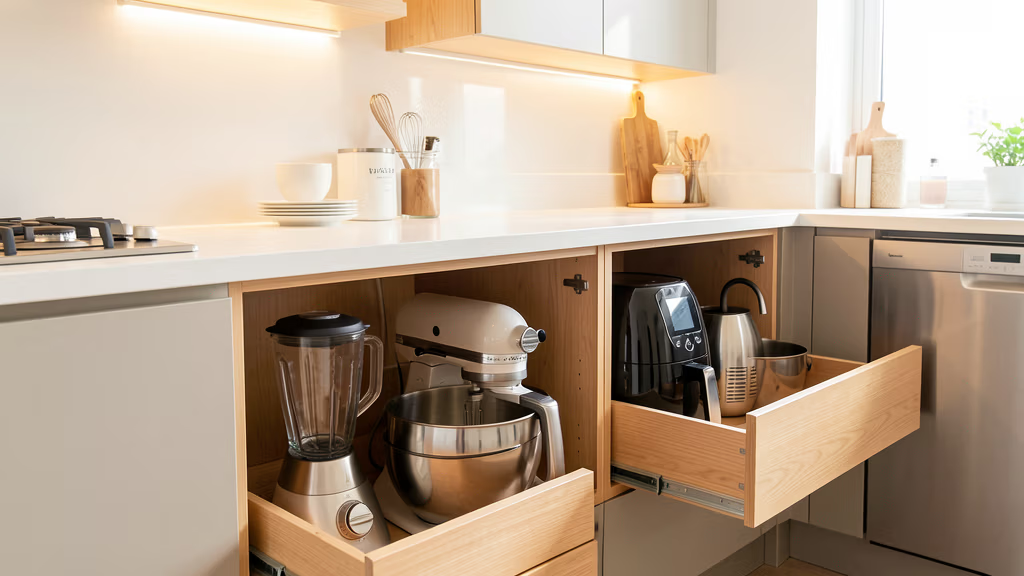
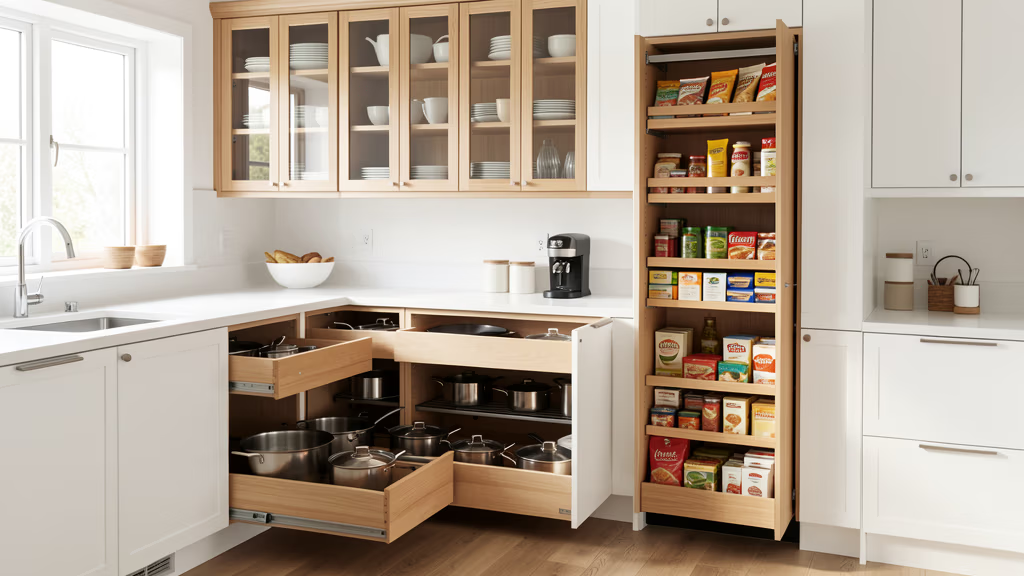
With a pull-out shelf, you pull the shelf outward and everything sits flat and visible. No kneeling required. No reaching into a dark box. You can see every item at a glance, and the shelf brings the back items to the front so you can grab them without disturbing anything else.
With a drawer, you open it and peer into a box. Items in the back are harder to see and reach. You might need to lift items from the front to get to what’s behind them. For deep drawers (common in base cabinets), the back items are essentially invisible until you empty the front.
[PHOTO PLACEHOLDER: After photo showing the same cabinet converted to pull-out shelves, fully organized with all items visible and accessible]
For elderly homeowners, anyone with back or knee problems, or parents who need to grab items quickly while holding a toddler, pull-out shelves are significantly more practical.
Storage Capacity: Which Holds More?
Drawers have a slight capacity advantage because the enclosed box design protects items from sliding off during extension. You can safely store taller items, loose utensils, and things that might tip on a flat shelf.
Pull-out shelves win on visibility and organization. Because everything sits flat and exposed, you can see exactly what you have. This actually increases effective storage — you’re less likely to buy duplicates of items you already own because you can see them.
For bulky items like pots, pans, and small appliances, pull-out shelves are superior. The flat surface provides better support than the confined space of a drawer box.
Cost Comparison
Pull-out shelves are significantly less expensive.
Typical costs per cabinet:
- Pull-out shelves: $80-$200 per cabinet (custom wood with soft-close tracks)
- Drawer conversion: $200-$500+ per cabinet (drawer box, front panel, hardware)
The price difference comes from the drawer box itself — the sides, bottom, and back panel that make up the drawer container. Pull-out shelves only need the shelf board and the tracks. No box construction required.
For a full kitchen (10 base cabinets), pull-out shelves might cost $1,200-$2,000. Converting to drawers could run $3,000-$6,000 or more.
Installation: Retrofit vs. New Construction
Pull-out shelves are the king of retrofits. They fit inside your existing cabinet carcass. You remove the existing shelf, measure the interior, and install new shelves on tracks. The existing cabinet doors stay on — they become the drawer fronts. No carpentry, no new cabinet boxes, no mess.
Drawer conversions are more invasive. You need to build or purchase drawer boxes, attach new fronts (or refinish existing ones), install drawer slides, and ensure proper clearance. In many cases, you’ll need to modify the cabinet interior to accommodate the drawer box depth.
If you’re updating an existing kitchen (which most Phoenix-area homeowners are — many homes in the Valley were built between 1970 and 2000), pull-out shelves are the far more practical choice.
Aesthetics: Do They Look Different?
From the outside? They look identical. Both use your existing cabinet doors as the front. Pull a handle and a shelf or a drawer comes out — to a guest, there’s no visual difference.
Inside? Pull-out shelves feel more open and airy because there’s no box enclosing them. Drawer boxes can make the interior feel cramped, especially in narrower cabinets.
Who Should Choose Pull-Out Shelves?
Pull-out shelves are the right call if you:
- Want to upgrade your existing cabinets without replacing them
- Need maximum accessibility (elderly, mobility concerns, or just convenience)
- Want the best return on investment for your kitchen
- Store bulky items like pots, pans, and appliances
- Want to see everything in your cabinets at a glance
- Are on a moderate to tight budget
Who Should Choose Drawers?
Drawers make sense if you:
- Are doing a full kitchen renovation with new cabinets
- Want enclosed storage for utensils and small items (prevents things from sliding)
- Prefer the traditional drawer experience
- Have the budget for a premium kitchen upgrade
- Are designing a new kitchen from scratch
The Hybrid Solution: Best of Both Worlds
Smart homeowners often combine both approaches. Here’s a typical configuration that Shelf Theory recommends for Phoenix-area kitchens:
- Lower base cabinets: Pull-out shelves for pots, pans, and appliances (heavy items benefit from flat shelf support)
- Upper base cabinets: Pull-out shelves for pantry items, canned goods, and food storage
- Dish drawer area: A single drawer conversion for utensils and flatware (where containment matters)
- Corner cabinets: Pull-out corner carousel or Lazy Susan
This hybrid approach gives you the organization benefits of drawers where they matter and the cost savings and accessibility of pull-out shelves everywhere else.
The Verdict
For most homeowners — especially those updating existing kitchens in Phoenix, the West Valley, and surrounding areas — pull-out shelves offer better accessibility, greater value, and a simpler installation than drawer conversions.
Drawers have their place, particularly in new construction or full renovations. But for the vast majority of kitchen organization projects, pull-out shelves are the smarter, more practical choice.
[PHOTO PLACEHOLDER: Final before-and-after collage showing multiple cabinet transformations from standard shelves to organized pull-out systems]
Ready to Stop Digging Through Your Cabinets?
Shelf Theory specializes in custom pull-out shelf systems for kitchens across Phoenix and the West Valley. We measure your space, design a system that fits your storage needs, and install it cleanly — usually in a single day.
Request your free in-home estimate today — or call us at (602) 799-9626. No pressure, no obligation. Just expert advice on what will work best for your kitchen.